From YAS to LYRA: Lowestoft and Yarmouth Regional Astronomers
Researched and written by Ron Larter of LYRA
First published (in book form) 2010
Introduction:
This account is dedicated to Michael Poxon, founder of the Great Yarmouth Astronomical Society, and to his friends and co-founders, Michael Bean and Glyn Wadbrook, who helped to mould the society in its early days.
Writing an account on the history of LYRA would not have been possible without the help of several members and ex-
members of the society. I would like to express my sincere thanks to all those who were so kind in my research by lending me documents, old newsletters, images, artefacts as well as providing information by way of personal knowledge that has enabled me to produce this book. Those I wish to publically thank are: Jim Kaler, honourable president Michael Poxon, founder and ex-member, Michael Bean, co-founder and ex-member, Glyn Wadbrook, co-founder and ex-member Richard Chilvers, secretary of LYRA: Simon Briggs, Kirkley Observatory Director: Reg Hunt, current members John Perring, treasurer Colin Watling, committee member John Skippings, ex-member Leonard Brundle, chairman. NOTE: John Seymour, who sadly passed away recently, worked relentlessly to help keep the society active in its early days, even though he was hounded by the rebellious, younger members at the time. Michael Poxon, who confessed to being one of the rebellious boys, wishes to publish his apologies to the society (and to John) for his unacceptable behaviour in those days.
Foreword
by Jim Kaler:
As a youth I belonged to the Schenectady Astronomy Club (Best not to try to pronounce it). Schenectady is a small city near Albany, New York, where I grew up well before the era of brightly lit skies. Once a month, I'd take the bus for the 20-mile ride (we still use English units here, while the English don't, but that's not part of the story) to the meeting, where I got to hear someone speaking on some topic. It did not matter what, as I was among like-minded folk who loved the astronomical arts and I could learn something new. In high school, a small group of us founded the Albany Astronomical Association, so then I had TWO groups I could go to.
I'm privileged now to be a professional astronomer. I've been one for 46 years. But I'm also still an amateur, and
after falling in love with the subject at the age of eight (when I wrote my first "book" on stars), I've been one far longer, now (rounding up a bit) going on 65 years. I don't see much distinction between the two except that as a professional I can spend more time at it. And amateur astronomy is one of the several reasons I was able to make it to a professorship and to live my life under the canopy of stars. Astronomy clubs are a foundation-stone of our science. They foster fascination with the skies, are centres of public learning, and provide an extensive base for public discussion and public policy for the exploration of space in all its aspects. The Schenectady group no longer exists, at least not in its original form, and our little student group died when we went away to college, while new ones came in to take their places. But there are no threads to the stories. I'm among the last who remembers. Which is why I was delighted to see this history of LYRA, which tells the tale of how the group came to be and how it grew into its present form. Knowing the story helps give solidity to the organization, helps gives it a base to grow on, so that it can continue to provide public services and education, and most of all so that it can continue to bring the beauty of the heavens to all, including those young people who may wish to make a life of it. So read on, and on behalf of all
of us who have benefitted from the Astro-clubs of the world, congratulations on your achievements. Jim Kaler, Professor Emeritus of Astronomy, University of Illinois (And honorary member of LYRA)
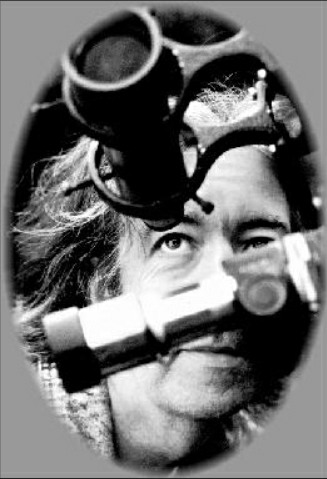 This account is dedicated to Michael Poxon, founder of the Great Yarmouth Astronomical Society, and to his friends and co-founders, Michael Bean and Glyn Wadbrook, who helped to mould the society in its early days.